Critically and Responsively engaging with Gender and Sexuality in Troubled Times
PhD/Postdoc Workshop with Professor Deevia Bhana
In her scholarship, prof. Deevia Bhana has demonstrated that gender and sexuality are not simply identities or categories, but social processes continually produced through everyday interactions, relationships and institutions. In this workshop, we will explore how contemporary struggles over gender and sexuality unfold and/or have unfolded across diverse sites of everyday life, and how these struggles shape—and are shaped by—questions of power, inequality, justice and social change.
Event details from: Critically and Responsively engaging with Gender and Sexuality in Troubled Times
- Date
- 23 October 2026
- Time
- 13:00 – 17:00
- Location
- Roeterseilandcampus - building B/C/D (entrance B/C), Nieuwe Achtergracht 166 1018 WV Amsterdam
- Room
- B5.12
Whether examining childhood, schooling, sexuality education or gender-based violence, prof. Bhana's work foregrounds the ordinary negotiations through which power is reproduced, resisted and transformed. Attending simultaneously to structural inequalities and lived experience, Bhana offers an approach that is both deeply grounded in everyday life and attentive to the broader political and historical forces that shape it. While Bhana's work on childhood and sexuality education provides an important point of departure, workshop participants are encouraged to think beyond formal education settings.
Guided by think pieces and focused discussions, we will examine questions including:
- How do educators, learners, families and communities experience, navigate and/or contest anti-gender and anti-LGBTQI+ politics in their everyday lives? Which pedagogies might offer means to foster dialogue across political divides?
- What do we learn about broader political transformations when we attend to the everyday experiences of gender and sexuality?
- How do colonial histories, race, class, religion, migration, disability, age and geopolitical location shape the production and contestation of gender and sexuality?
- In contexts of political polarization, how can researchers respond to resistance to/ dismissal of their work related to questions of gender and sexuality more broadly?
- What methodological and ethical dilemmas arise when researching gender and sexuality in increasingly polarised political environments?
- What possibilities for care, solidarity, resistance and social transformation emerge in troubled times, and how can academic researchers ensure their work is of / retains practical and political value?
The workshop is open to AISSR and Humanities PhDs and Postdocs and will consist of a short introduction by the organisers, followed by discussions organised around six-seven think pieces written by participants. Rather than presenting fully developed arguments, the think pieces should introduce a conceptual question, empirical observation or methodological dilemma that speaks to the workshop's central theme. The papers will be circulated beforehand to facilitate focused discussion.
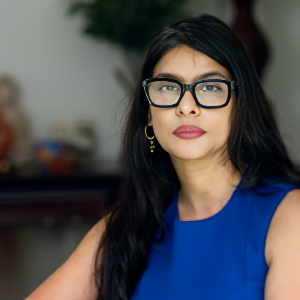
About professor Deevia Bhana
Deevia Bhana is the South African Research Chair at the University of KwaZulu-Natal, South Africa. Her research reflects a long-standing focus on children and young people, challenging the marginalisation of gender and sexuality in the study of childhood, while opening up and confronting children and young people's experiences of gender inequalities, heterosexual domination and violence and addressing the educational response to these problems.