Prophecies and Pedagogies in Times of Uncertainty
5 March 2026
A first discussion on belief and negotiation
The first seminar, led by Patrick Arhin, examined how belief systems and prophecies from deities influence expectations, claims, and demands in corporate–community mining negotiations in Ewoyaa, Ghana. Rather than approaching negotiations solely as technical or economic processes, Patrick highlighted their moral and spiritual dimensions.
He began with a simple yet powerful anecdote from the field: while driving through the community, a local driver remarked, “There are gods here. If you don’t honk and one is crossing, you might hit it.” In Ewoyaa, deities are understood as active protectors of the community. Their presence shapes how mining activities are interpreted and assessed. At the centre of the case is a prophecy delivered during a 2015 festival, in which a deity foretold the discovery of a mineral and declared that Ewoyaa would become a “model town.” Community leaders interpret this prophecy not as a distant hope, but as a binding obligation. If the town is to be a model, it must have good roads, proper healthcare facilities, and quality education. Development, in this framing, is not a corporate favour but a spiritual requirement.
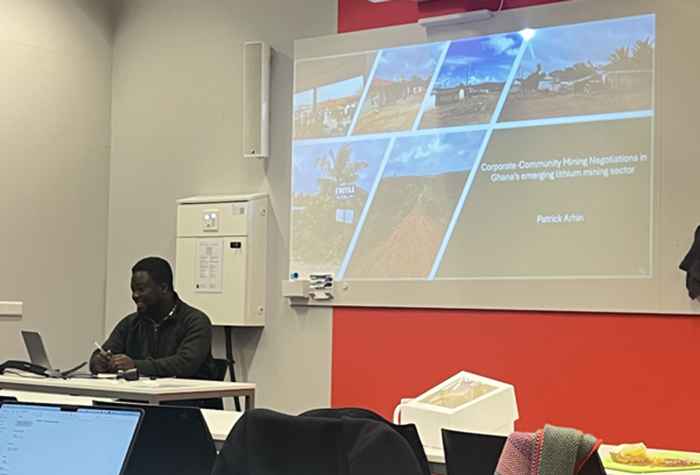
This belief has tangible consequences for negotiation processes. It legitimises community claims over mineral resources and establishes moral conditions for tolerating mining activity. As Patrick showed, prophecy becomes a normative framework through which compensation, resettlement, and development promises are evaluated. For company representatives, this adds complexity: negotiations are not only about land rights and financial valuation, but also about honouring spiritually grounded expectations. The discussion that followed reflected on how such belief systems challenge dominant models of negotiation. Rather than dismissing spirituality as irrational or external to governance, the seminar invited us to recognise it as constitutive of how justice, entitlement, and the future are imagined and contested.
A collective reflection on teaching in times of collapse
The second part of the seminar shifted our attention from mining negotiations to the classroom. Under the book “Pedagogies of Collapse” by Ginie Servant-Miklos, we reflected guided by Assistant professor Line Kuppens on what it means to teach about climate crisis, capitalism, and conflict in ways that are both critical and hopeful.
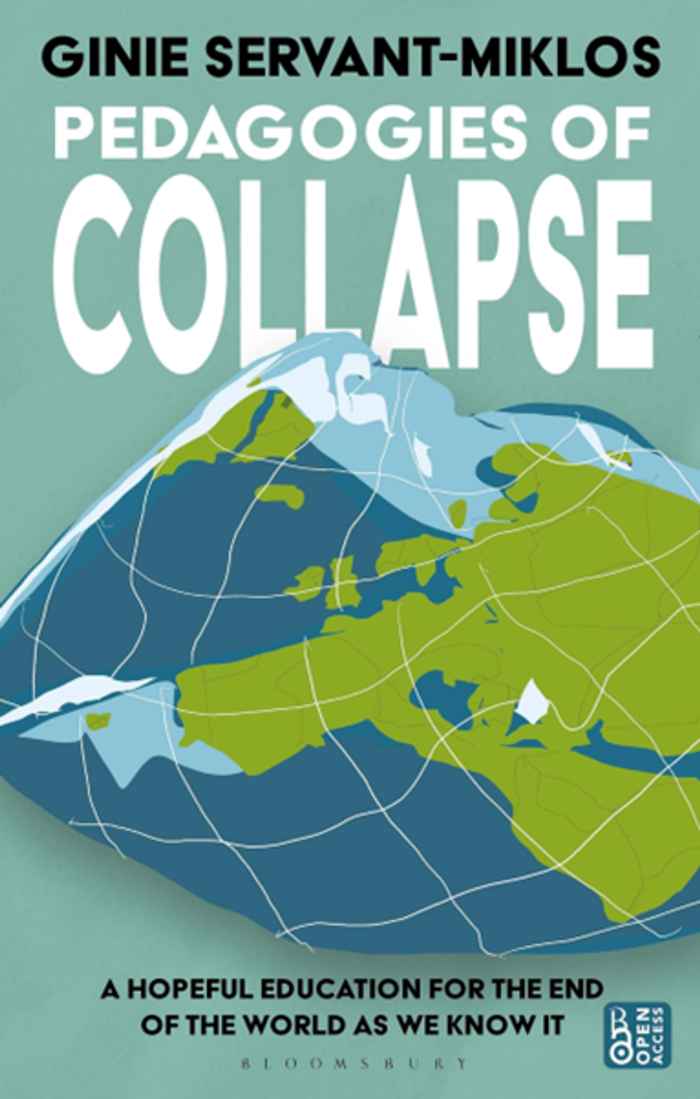
Many participants recognised a growing sense of anxiety among students. Fields such as conflict studies, climate education, and international development often confront learners with systemic injustice and ecological breakdown. In doing so, they critically deconstruct the world around us. Yet an important question arises: what prospects for the future do we offer in return? The session invited us to consider education in catastrophic times as a distinct pedagogical challenge. How do we make space for grief without fostering paralysis? How do we speak truthfully about crisis while sustaining a sense of agency?
Several guiding principles emerged from the conversation. These included creating space for emotional processing, acknowledging cognitive dissonance, and encouraging dialogue-based learning. Participants reflected on the importance of not making “perfect” the enemy of “good,” and of supporting forms of action that are situated and feasible in the present. The notion of “imperfect solidarities” resonated strongly, suggesting that collective engagement does not require certainty or completeness, but rather a willingness to remain connected in the face of fragility.
The seminar also explored more experimental pedagogical practices, including embodied learning and attention to the body–mind nexus. Rather than separating intellectual critique from lived experience, the discussion highlighted the value of integrating analysis, emotion, and relationality in teaching.
Looking ahead
Although the two seminars addressed different empirical and pedagogical contexts, both foregrounded how futures are imagined and negotiated. In Ewoyaa, prophecy frames development as a moral and spiritual obligation. In our classrooms, students grapple with possible futures shaped by climate breakdown and systemic crisis. In both cases, expectations about what should be shape what is demanded in the present.
By bringing these themes into conversation, the GID seminars once again created space for collective reflection on the broader implications of our research and teaching practices. They reminded us that governance, development, and education are never only technical domains. They are also spaces where belief, responsibility, and hope are actively constructed and contested.