IMPULSE spotlight: Robbin Jan van Duijne
Defining Safe Work in a Hotter and More Humid World
8 April 2026
To support early-career researchers following the discontinuation of national starter and stimulation grants, the AISSR launched its own funding scheme: IMPULSE grants.
Impulse Spotlight
In this IMPULSE Spotlight series, we highlight the researchers behind these IMPULSE projects: what drives their work, why it matters, and the impact they hope to make.
In this edition, we speak with Robbin Jan van Duijne about his project, which examines the health risks to heat and humidity-exposed agricultural workers in areas most affected by rapidly rising temperatures.
Why is this research important right now?
'By now, most people understand that the Earth is warming rapidly and that this has a variety of consequences for different places and peoples. What fewer people know is that warmer air can hold much more moisture: for every additional degree of warming, our atmosphere can hold roughly 7% more water vapor. That means rising humidity, especially in the tropics, where it is already very humid today', Robbin Jan begins.
'Sweating is the body’s natural cooling function', he reminds us. 'But when humidity increases, this cooling function becomes less effective, compromising the body’s ability to release heat. This can lead to serious health risks to agricultural workers doing heavy manual labor in hotter climates.'
Van Duijne explains that scientists use the term “wet-bulb temperature” about the combined effect of heat and humidity on the human body. Recent findings show that the internal cooling system begins to decline at wet-bulb temperatures of 31-31 degrees. However, in his extensive fieldwork in rural India over the years, Robbin Jan has repeatedly observed manual labor being performed in monsoon conditions that exceed these thresholds, including days above 34°C wet-bulb.
'Agriculture still employs 275 million people in India, by far the world’s biggest farming workforce. This is why the research is urgent now: as global temperatures continue to rise, humid-heat exposure in the tropics is likely to intensify. We need a much better understanding of what these conditions mean for the health and safety of people who cannot avoid working outdoors.'
As global temperatures continue to rise, humid-heat exposure in the tropics is likely to intensify. We need a much better understanding of what these conditions mean for the health and safety of people who cannot avoid working outdoors
What impact do you hope your project will have, within your field and related domains, and for society more broadly?
'This project aims to bring physiological, real-world evidence into how we understand climate impacts on work', says Robbin Jan. 'By combining what we measure in the field - how workers’ bodies respond to hot-humid conditions - with climate projections for mid- and late-century, we can estimate what climate change means for the human ability to work safely in different regions.'
The geographer adds that that he hopes the project can support practical improvements to the working conditions of agricultural workers in the short term, addressing concerns like resting schedules, hydration-monitoring and shade requirements.
If you had to explain your research to a non-expert friend at a dinner party, how would you describe it?
'When there is a heatwave in Western Europe, people are advised to take rest, stay indoors, hydrate. But not everybody has that luxury. Some people have to conduct hard work in those conditions to earn their daily wages. I study what extreme heat + humidity together do to the human body, especially for people who have to work outdoors', Robbin Jan begins.
He explains that in order to examine this, his research team will collaborate with local agricultural workers in rural India. By installing small sensors on the workers while they go about their day, they can track things like core temperature, skin temperature and heart rate. This will allow them to see when the body starts struggling to cool itself down under harsh working conditions.
'My research ultimately asks a practical question: what does “safe work” look like as weather conditions become more severe with climate change? That means understanding when breaks are needed, how long heavy work can safely continue, and which warning signs matter'.
He closes with a warning. 'If humid heat keeps intensifying in the tropics, some days may become effectively impossible for heavy outdoor labor. That raises broader questions not only about health, but also about how societies, economies, and labor systems adapt to a warming climate.'
'When there is a heatwave in Western Europe, people are advised to take rest, stay indoors, hydrate. But not everybody has that luxury
Looking Ahead
Over the next two years, Robbin Jan and his research team will conduct field experiments in rural India, registering physiological measurements from heat-exposed laborers.
In combination with a computational analysis of long-term wet-bulb trends, this will lay the groundwork for the researcher’s ERC starting grant application, with which he intends to further develop this area of study.
Meet the Researcher
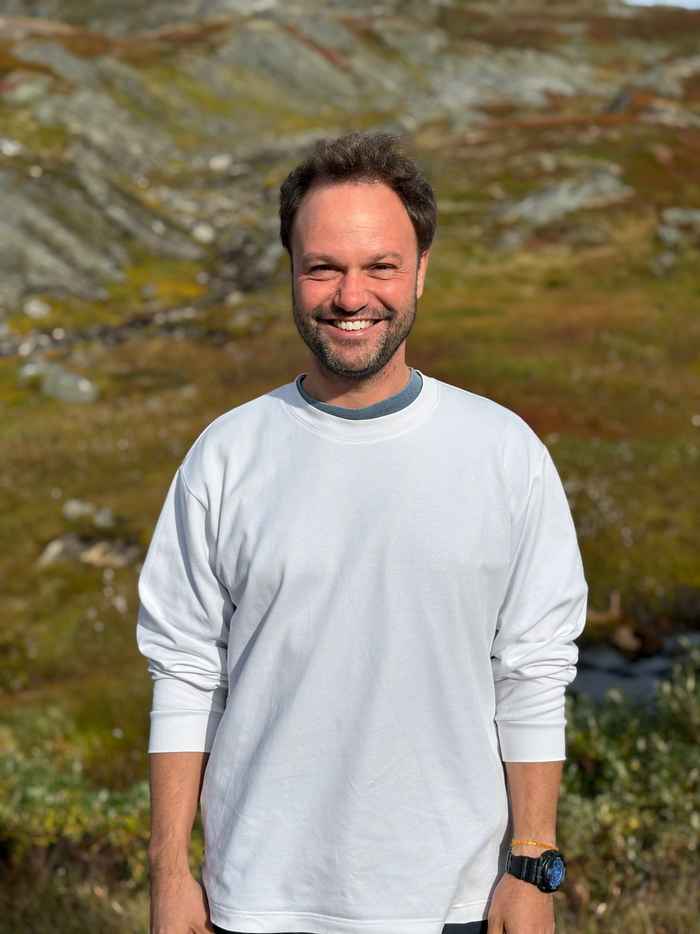
Robbin Jan van Duijne is an Assistant Professor in the Governance and Inclusive Development program group, part of the Department of Human Geography, Planning and International Development at the UvA/AISSR.
Most of his research is conducted in remote areas of rural India.